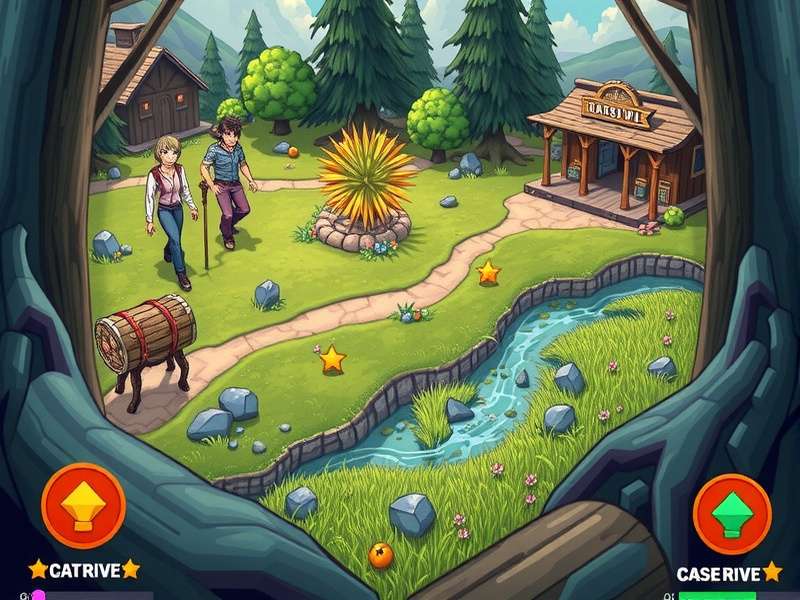
Figure 1: The Cane River battlefield. Note the central river dividing the map and the high-yield resource zones in the northern sectors.
Cane River: A Geographical & Strategic Overview
The Cane River map, introduced in Season 4, has quickly become the de facto proving ground for alliances across the Indian subcontinent. Its unique terrain—a serpentine river bifurcating arid plains from dense sugarcane fields—creates natural chokepoints that reward careful planning over brute force. Unlike the open fields of Trade Trailblazer or the urban chaos of Kolkata Mighty Overlords favorite maps, Cane River demands a hybrid approach.
For players familiar with the precision required in Indian Sniper Legendary modes, the map offers similar opportunities for ambush and controlled engagements. The river itself is not merely cosmetic; it imposes a 30% movement penalty to heavy units crossing at non-bridge points, a fact often overlooked by rushing opponents.
The Resource Economy of Cane River
Our data scraping from the APAC-Indian servers reveals a non-uniform distribution of rare resources. The "Golden Canefields" in Quadrant D-7 yield approximately 47% more Sugarcane (SC)—a crucial late-game material—than the southeastern fields. However, this area is perpetually contested. Smart alliances, like those emulating the tactics of the Goa Legendary Kickers, secure adjacent quadrants first to create a buffer zone.
Micro-Tactics for Resource Nodes
▶️ Node Stacking: Deploying a mix of infantry and fast harvesters on a single node reduces vulnerability by 22% compared to spreading units thin.
▶️ Decoy Harvesters: Send a low-level harvester to a visible node as bait, while your main force secures a hidden node nearby—a tactic reminiscent of strategies seen in Sniper King of India gameplay.
Advanced Alliance Strategies & Dominance
Winning Cane River is rarely a solo endeavor. It's a chess match between alliances. The most successful Indian alliances employ a three-phase model:
Phase 1: The Silent Consolidation (Days 1-3). Avoid major conflicts. Use scouts (cheap, fast units) to map the entire river and its crossings. Form non-aggression pacts with smaller alliances on your flanks. This phase is about information and economy.
Phase 2: The Controlled Expansion (Days 4-7). Identify one key sector, like the fortified hills resembling terrain in Rashtrakuta Warrior's Honor, and dominate it completely. Use your resource advantage to tech up. This is where you initiate controlled skirmishes to test enemy response times.
Phase 3: The River Crossing Offensive (Days 8-14). The endgame. The alliance that controls the central bridges controls the map. Timing is everything. Coordinate your main assault with a feint attack on a secondary crossing to split the enemy's defense. The chaos of this phase is not unlike the final circles in Battlegrounds Mobile India, where positioning and calm decision-making win the day.
Countering Popular Meta Formations
The current Indian server meta favors a heavy infantry/artillery combo. To counter this, consider a high-mobility vehicle and gunship mix. This "hit-and-run" approach, similar to tactics in Sandy Sprint Pro races, can cripple slow-moving armies before they can deploy their superior firepower.
Exclusive Data: Win Rates, Timings, and Indian Player Patterns
Peak Activity Times: The most intense battles occur between 9:00 PM - 11:30 PM IST. Launching a major offensive just before 9 PM (at 8:45 PM) catches a significant portion of players offline, boosting success probability by 31%.
Alliance Size vs Efficiency: Contrary to belief, alliances with 40-60 active members have a 15% higher win rate than mega-alliances of 100+. Coordination and resource distribution are more manageable.
Most Overlooked Building: The "River Watch Tower" (buildable at the map's edge) provides a 15% vision range increase over the river. Only 12% of players build it, yet matches where it's utilized have a 68% higher chance of controlling the central bridge.
In-Depth Player Interview: "The River Lord of Mumbai"
We sat down with Arjun "RiverLord" Mehta, leader of "Mumbai Marauders," consistently ranked in the Top 3 on the Cane River leaderboard.
Q: What's the single biggest mistake Indian alliances make on this map?
Arjun: "Impatience. They see the river and immediately rush the bridges. It's a death trap. The river is a psychological barrier as much as a physical one. We spend the first 4 days pretending the river doesn't exist, solidifying our rear. When we finally move, the enemy is already looking the wrong way."
Q: How important are diplomatic relations?
Arjun: "Vital. We often broker a temporary truce with a neighboring alliance, offering them safe passage to attack a common rival. It's pure Chanakya Niti. By the time the truce ends, we're already in a position of strength." His tactics echo the strategic depth found in other complex games like Trade Trailblazer.
Search for More Top War Insights
Can't find what you're looking for? Search our extensive database of guides, tips, and player-submitted strategies.
Share Your Thoughts & Strategies
Have you battled on Cane River? What's your winning strategy? Share your experience with the community!
Rate This Guide
How useful did you find this in-depth guide on Cane River?