Table of Contents
Archery Ace Fiesta: Complete Encyclopedia
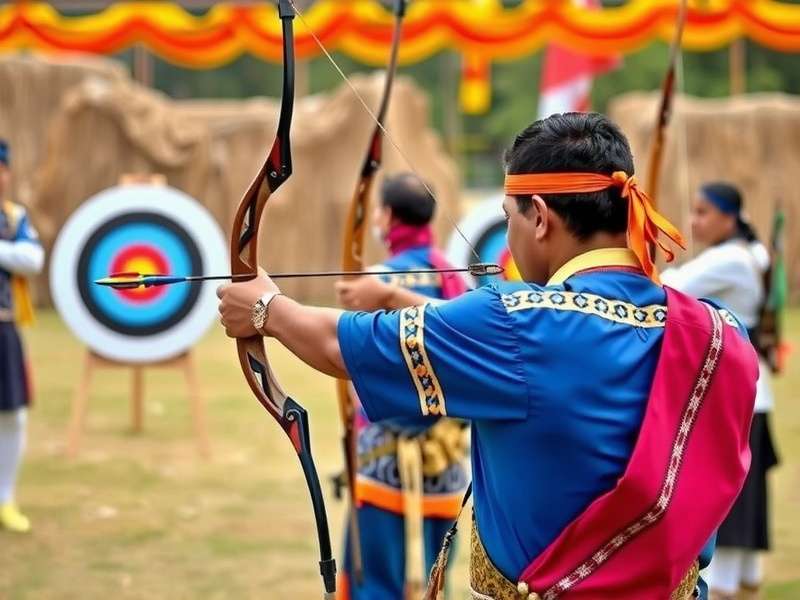
Traditional archers competing in the prestigious Archery Ace Fiesta tournament
The Archery Ace Fiesta represents one of India's most celebrated traditional sports, blending ancient archery techniques with modern competitive spirit. This prestigious event attracts participants from across the country and has gained international recognition for its unique format and cultural significance.
? Key Insight: The Archery Ace Fiesta isn't merely a sporting competition—it's a living tradition that preserves India's rich archery heritage while adapting to contemporary sporting standards.
Originating from rural festivals in Northern India, the Archery Ace Fiesta has evolved into a structured tournament while maintaining its traditional essence. Participants demonstrate extraordinary skill with traditional Indian bows, competing in various categories that test accuracy, distance shooting, and speed.
What sets the Archery Ace Fiesta apart from conventional archery competitions is its emphasis on traditional equipment and techniques. While modern archery has embraced technological advancements, this fiesta celebrates the raw skill and precision that defined historical Indian archery.
Historical Origins & Evolution
The roots of Archery Ace Fiesta trace back to ancient Indian martial traditions, where archery was considered one of the essential skills for warriors. Historical records indicate that organized archery competitions were held during seasonal festivals as early as the 12th century.
During the Mughal era, archery gained prominence as both a military skill and recreational activity. Royal courts hosted elaborate tournaments where skilled archers demonstrated their prowess. These events laid the foundation for what would eventually become the structured Archery Ace Fiesta we know today.
? Historical Note: The term "fiesta" was incorporated during the colonial period, reflecting the festive atmosphere that surrounds these competitions, which often coincide with local harvest festivals and cultural celebrations.
The modern iteration of Archery Ace Fiesta began taking shape in the early 20th century when traditional sports enthusiasts sought to preserve India's archery heritage. Formal rules were established in 1934, and the first officially recognized tournament was held in 1937 in Rajasthan.
Post-independence, the Archery Ace Fiesta gained governmental support as part of India's cultural preservation efforts. The competition format was standardized, and regional qualifying tournaments were established to identify the most skilled traditional archers from across the country.

Ancient Indian archery techniques that influenced the development of Archery Ace Fiesta
In recent decades, the Archery Ace Fiesta has experienced a resurgence in popularity, attracting younger participants and international attention. Television coverage and digital streaming have brought this traditional sport to global audiences, while maintaining its authentic cultural character.
Game Rules & Regulations
Competition Format
The Archery Ace Fiesta follows a multi-stage competition structure designed to test various aspects of traditional archery skill. Participants must qualify through regional tournaments before advancing to the national championship.
Competition categories include precision shooting at stationary targets, moving targets, distance shooting, and speed rounds. Each category has specific rules regarding equipment, shooting distance, and time limits that participants must adhere to strictly.
Scoring System
The scoring in Archery Ace Fiesta combines traditional Indian measurement systems with modern point-based scoring. Targets are typically circular with concentric rings, each assigned different point values based on difficulty and distance.
? Pro Tip: Master archers in Archery Ace Fiesta often specialize in specific competition categories, though the most prestigious award goes to participants who demonstrate excellence across all categories.
Judges evaluate not only accuracy but also form, technique, and adherence to traditional shooting styles. Bonus points may be awarded for exceptional displays of skill or for hitting specially marked zones on the targets.
Equipment Regulations
To preserve the traditional nature of the competition, Archery Ace Fiesta mandates the use of specific types of traditional Indian bows. Modern compound bows, sights, and stabilizers are prohibited in most categories.
Arrows must be constructed using traditional methods and materials, though safety standards have been updated to meet contemporary requirements. Participants may use personal equipment that meets specification guidelines or standard equipment provided by tournament organizers.
Equipment & Gear
The equipment used in Archery Ace Fiesta reflects centuries of Indian archery tradition. The primary bow type is the longbow-style "dhanush," typically crafted from bamboo, wood, or horn composites using traditional methods passed down through generations.
Arrows, known as "baan," are equally important and are carefully selected or crafted by competitors. Traditional fletching using bird feathers and specific arrowhead designs contribute to the unique characteristics of each archer's equipment setup.
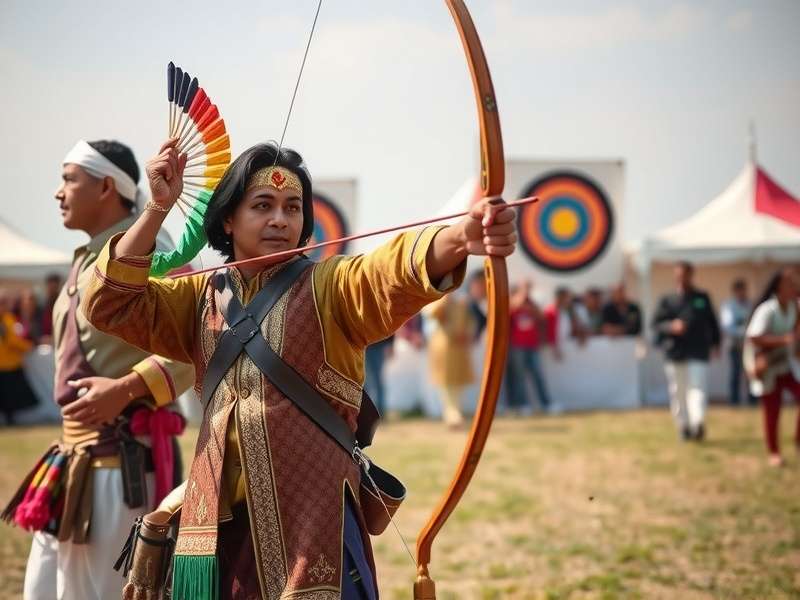
Traditional Indian archery equipment used in Archery Ace Fiesta competitions
Protective gear in Archery Ace Fiesta includes arm guards and finger tabs, though traditionalists sometimes prefer minimal protection to maintain historical authenticity. Modern safety standards have introduced mandatory basic protection without compromising the traditional experience.
Equipment inspection is a crucial part of Archery Ace Fiesta tournaments. Officials verify that all gear complies with traditional specifications while meeting safety requirements. This balance between authenticity and safety represents the core philosophy of the competition.
Shooting Techniques
Traditional Stances
Archery Ace Fiesta competitors employ various traditional stances that have been practiced in India for centuries. These stances are designed to maximize stability, accuracy, and power while accommodating the unique characteristics of traditional Indian bows.
The "Virabhadrasana" stance, inspired by warrior yoga poses, provides exceptional stability for long-distance shooting. The "Dhanur Asana" focuses on upper body alignment and is particularly effective for precision target shooting at medium ranges.
Drawing Methods
Traditional Indian drawing techniques distinguish Archery Ace Fiesta from other archery forms. The "Mongolian release" using the thumb is common, though some regions employ unique variations that have been preserved through oral tradition and practical demonstration.
? Expert Insight: The breathing techniques incorporated in Archery Ace Fiesta shooting are as important as physical form. Master archers synchronize their breath with each shot cycle, achieving remarkable consistency and mental focus.
Advanced competitors in Archery Ace Fiesta often develop personalized variations of traditional techniques, adapting them to their physical attributes and shooting preferences. This individual expression within traditional parameters is encouraged and celebrated.
Aiming Systems
Unlike modern archery with its precise sighting systems, Archery Ace Fiesta relies on instinctive aiming methods developed through extensive practice. Archers learn to judge distance, wind conditions, and arrow trajectory through experience rather than mechanical aids.
This instinctive approach creates a deeper connection between the archer and their equipment, embodying the philosophical principles that underpin traditional Indian archery. Mental focus and visualization play crucial roles in achieving consistent accuracy.
Competition Structure
The Archery Ace Fiesta follows a hierarchical competition model that begins at the village level and culminates in the national championship. This structure ensures broad participation while identifying the most skilled traditional archers from across India.
Regional qualifying tournaments are held throughout the year, typically aligning with local festivals and cultural events. Successful competitors advance to zonal championships, then to the national Archery Ace Fiesta where the ultimate champions are determined.
Competition Categories
Archery Ace Fiesta features multiple competition categories designed to test different aspects of traditional archery skill. These include stationary target shooting at various distances, moving target challenges, and specialty events that recreate historical hunting or combat scenarios.
The most prestigious category is the "Sarvottam Dhanurdhari" (Supreme Archer) competition, which tests comprehensive skills across all disciplines. Winners of this category achieve the highest honor in traditional Indian archery and their names are recorded in the Archery Ace Fiesta hall of fame.
? Championship Fact: The national Archery Ace Fiesta championship rotates between different Indian states each year, celebrating the diverse regional variations of traditional archery found across the country.
Judging Criteria
Judging in Archery Ace Fiesta combines quantitative scoring of arrow placement with qualitative assessment of technique and form. Senior judges, often retired champion archers, evaluate competitors based on traditional standards that have been preserved through generations.
Beyond mere accuracy, judges consider the elegance and efficiency of each archer's movements, their adherence to traditional forms, and their overall comportment during competition. This holistic approach reflects the philosophical dimensions of traditional Indian archery.
Cultural Significance
The Archery Ace Fiesta represents far more than a sporting competition—it is a living repository of Indian cultural heritage. The event preserves ancient skills, traditional craftsmanship, and philosophical approaches to mastery that might otherwise be lost to modernization.
In many rural communities, excelling in Archery Ace Fiesta brings significant social prestige. Families with generations of archery tradition take great pride in their descendants' participation and success in these tournaments, maintaining cultural continuity.
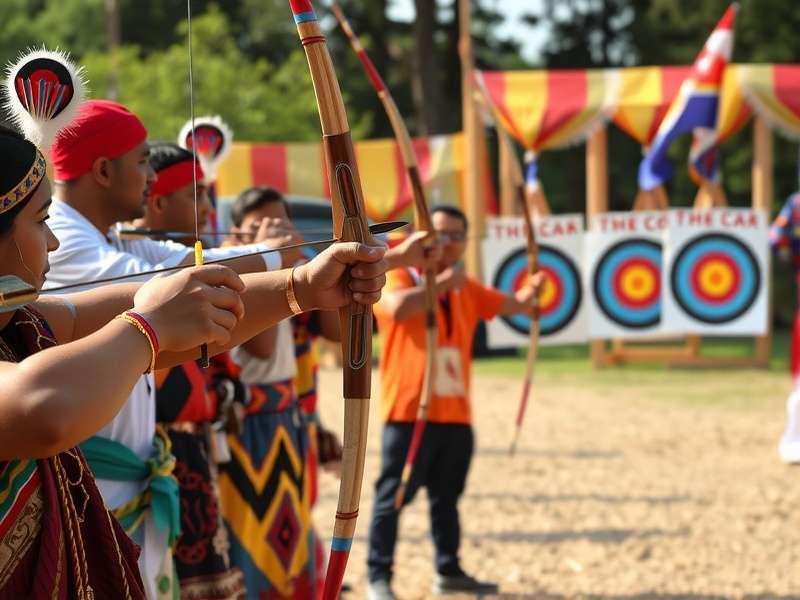
Cultural performances and ceremonies that accompany Archery Ace Fiesta events
The philosophical dimensions of Archery Ace Fiesta connect to broader Indian spiritual traditions. Concepts such as "dhyana" (meditative focus), "prana" (life force control), and "yoga" (union of body and mind) are integral to advanced archery practice and competition.
Traditional music, dance, and culinary traditions often accompany Archery Ace Fiesta events, creating a holistic cultural experience. These elements transform the competition into a celebration of regional identity and national heritage, attracting spectators beyond archery enthusiasts.
Educational Impact
In recent years, Archery Ace Fiesta organizations have developed educational programs to introduce younger generations to traditional archery. These initiatives combine physical training with historical and cultural education, ensuring the continuation of this important heritage.
Schools in regions with strong archery traditions sometimes incorporate basic Archery Ace Fiesta techniques into physical education curricula. This early exposure helps identify promising young archers while instilling appreciation for traditional sports.
Modern Adaptations
While firmly rooted in tradition, Archery Ace Fiesta has thoughtfully incorporated certain modern elements to ensure its relevance and sustainability. These adaptations balance preservation of heritage with contemporary sporting standards and audience expectations.
Digital scoring systems have been introduced to complement traditional judging methods, providing instant feedback to participants and spectators. Live streaming and social media coverage have expanded the audience for Archery Ace Fiesta events while maintaining respectful presentation of traditional elements.
? Future Vision: The Archery Ace Fiesta governing council is exploring international demonstration events and cultural exchange programs to share India's archery heritage with global audiences while learning from other traditional archery traditions.
Safety standards have been updated based on modern sports medicine research, reducing injury risks without compromising traditional techniques. Equipment regulations have been refined to preserve authenticity while ensuring participant safety and fair competition.
Women in Archery Ace Fiesta
Historically male-dominated, Archery Ace Fiesta has made significant strides in gender inclusion. Women's categories were formally established in 1987, and participation has grown steadily. Female archers now compete at the highest levels and have developed their own distinctive approaches to traditional techniques.
This expansion has enriched the Archery Ace Fiesta tradition while challenging historical gender limitations. The success of women competitors has inspired new generations of female archers and contributed to the evolution of training methods and competition formats.
International Recognition
The unique character of Archery Ace Fiesta has attracted international attention from traditional sports enthusiasts and cultural organizations. Demonstration teams have performed at international festivals, and foreign archers have begun participating in invitation categories.
This global interest has created opportunities for cultural exchange while reinforcing the value of preserving traditional sports. The Archery Ace Fiesta model has inspired similar initiatives in other countries seeking to revive their own archery heritage.
As Archery Ace Fiesta continues to evolve, it faces the ongoing challenge of balancing tradition with innovation. The commitment to preserving authentic techniques while making the sport accessible to new generations will determine its future trajectory and cultural impact.